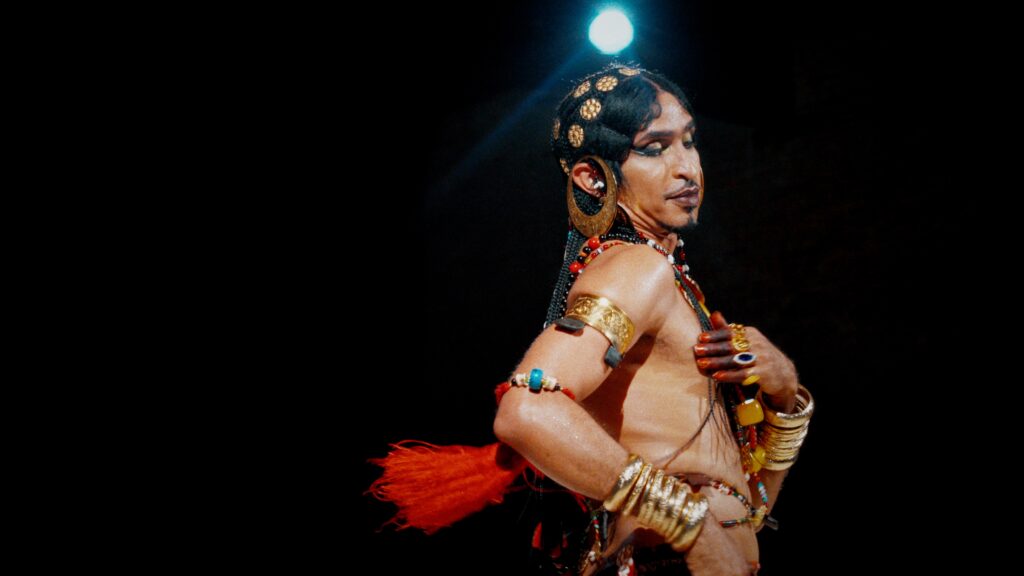
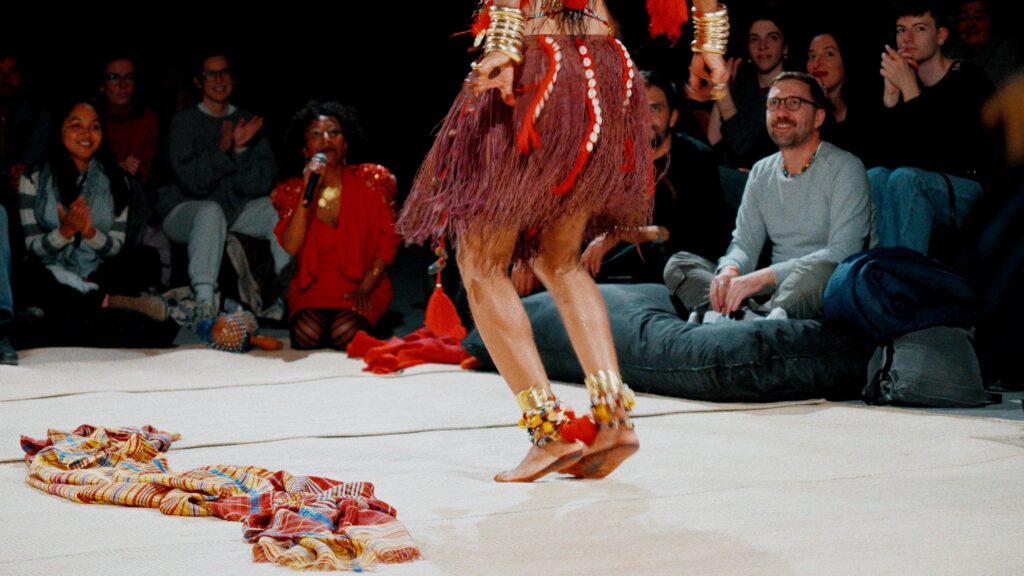
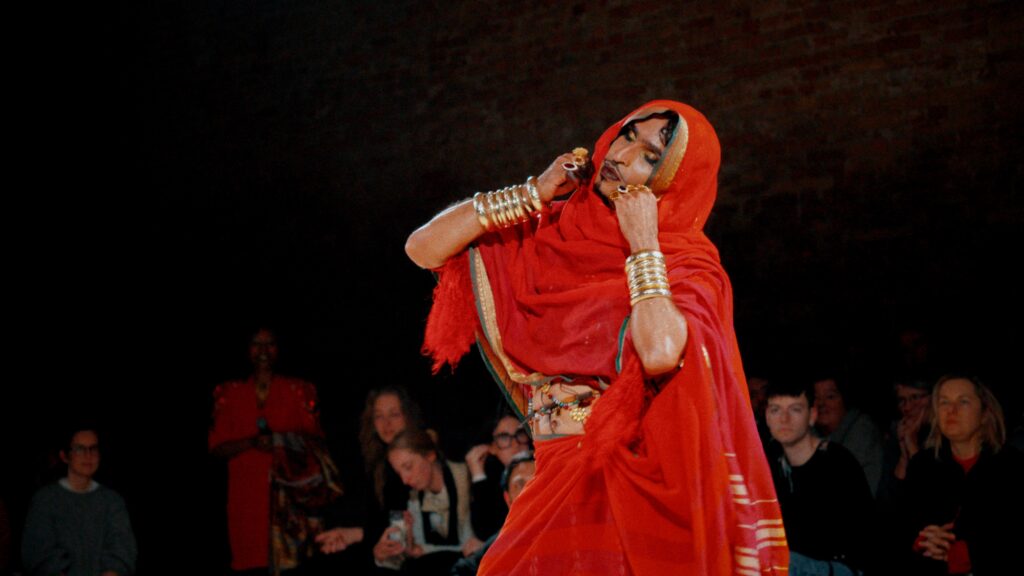
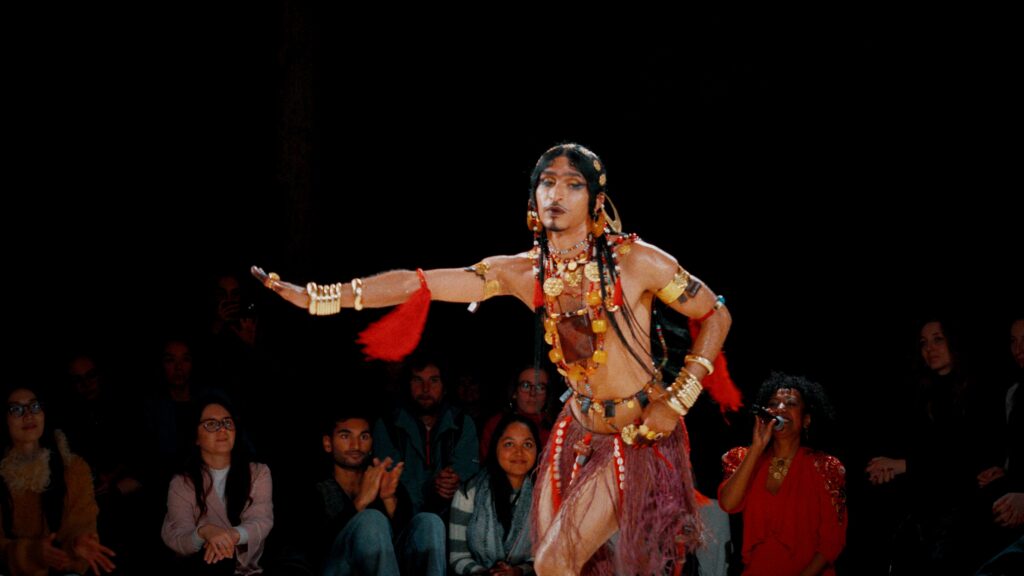
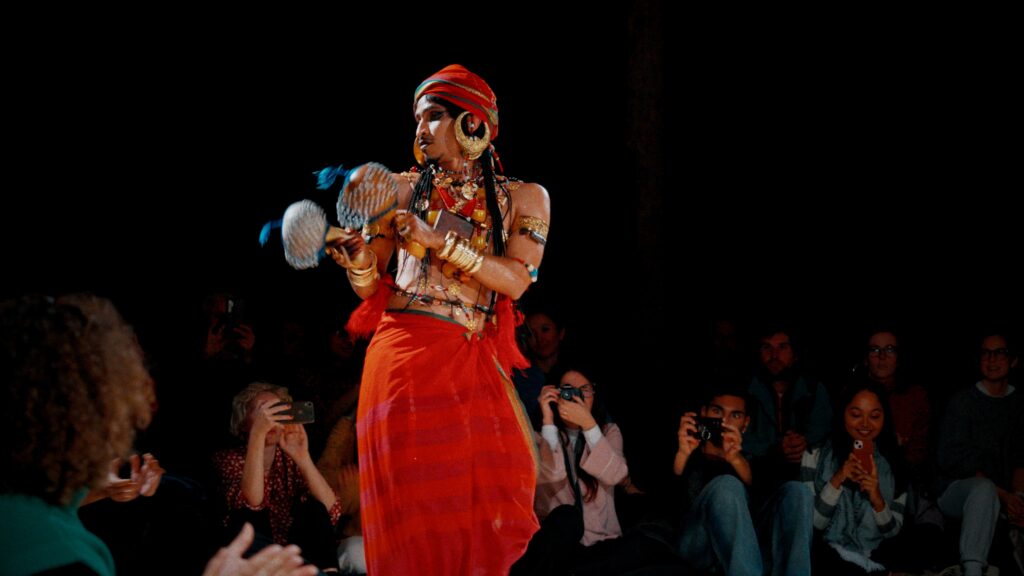
Ahmed Umar ‘Talitin’ live at Venice Biennale
‘Talitin’ Ritual as Resistance: Ahmed Umar’s Queer Reclamation
‘Talitin’ by the Sudanese-Norwegian artist Ahmed Umar presents a visual landscape where tradition and identity collide. The performance is a restaging of the Sudanese Bridal Dance, a ritual that used to be a public event that with the shift of Sudanese regimes adopting an Arab identity and so called “Islamic Renaissance”, became strictly defined by rigid gender roles. Through this piece, Umar inhabits a space that was previously forbidden, turning a celebratory ceremony into a beautiful queer revolution.
Umar notes: “The bridal dance was only performed by brides, but it used to be a public event. The whole village would attend, young and old, people of all genders. The shift happened after the Sudanese regimes started adopting an Arab identity, enforcing the so-called “Islamic renaissance” and denouncing many of our historical Sudanese traditions, especially those related to spirituality and women’s bodies. The bridal dance became an easy target because it celebrates and proudly displays women’s bodies. My grandmother danced topless, and my costume is inspired by the one she made for my aunts. Now, almost no bride dances in my family and very few in middle Sudan (where I’m from and the dance originates). If they ever do, it is strictly for women, and no filming is allowed.”
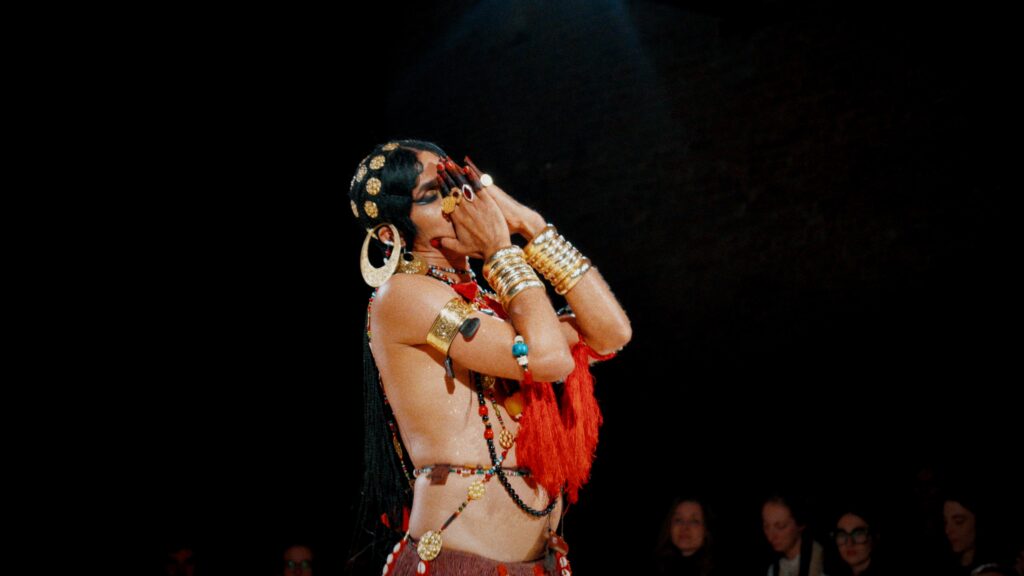
This performance gained international acclaim when it was presented at the 60th Venice Biennale titled ‘Foreigners Everywhere’, curated by Adriano Pedrosa in 2024, and its release today coincides with the opening of the 61st edition in 2026, echoing the new Biennale theme of “In Minor Keys”, a curatorial focus on the sacred, the quiet, and the marginalized narratives that operate beneath the surface of global discourse.
Ahmed Umar, a multidisciplinary artist whose practice functions as a “visual autobiography,” views this performance as a vital search for history. They draw upon the historical concept of Talitin; a term once used in Sudanese Arabic to describe men who occupied a space between genders, often residing in the company of women. By stepping into this role, Umar proves that their identity is not a “modern import” or a Western imposition, but something that has deep, albeit suppressed, roots in Sudanese heritage. To ensure the performance was a profound immersion into the culture rather than a superficial imitation, Umar spent three years in rigorous training. This precision ensures that the critique comes from a place of deep love and technical mastery, grounding the work in a profound respect for the lineage it challenges.
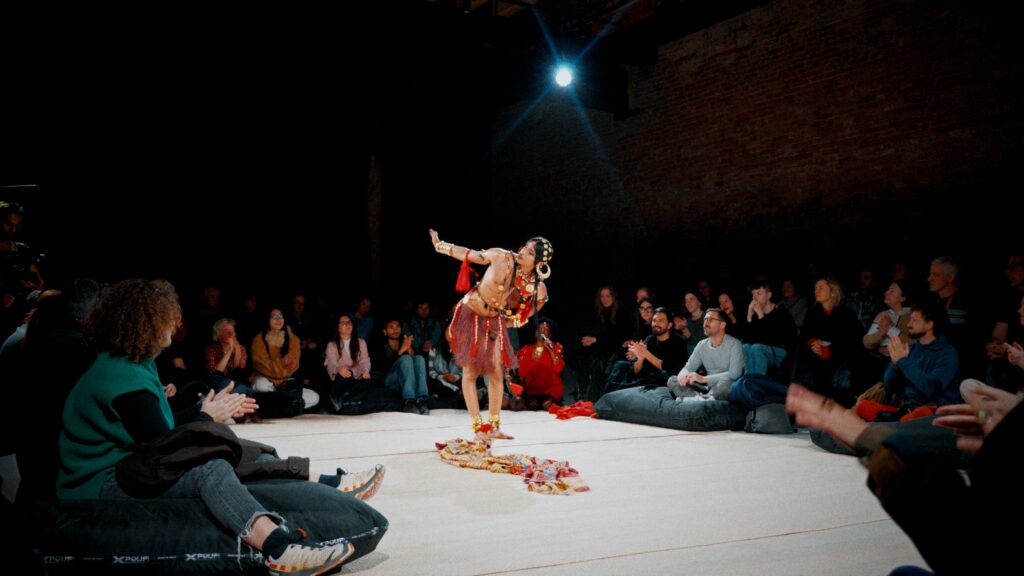
This film documents a specific “cultural collision” within the bridal dance, perhaps the most gender-segregated event in Sudanese society. Every tilt of the head and flick of the wrist follows a strict traditional code, yet Umar’s mastery of these movements serves to shed new meaning into the ritual from within. The beauty is so undeniable that it forces the viewer to accept the queer body as a legitimate vessel for tradition. Accompanied by the haunting, soulful vocals of Alsarah, the performance mimics the communal support of a real wedding. This creates what might be described as a “speculative future”, a world where a queer person is celebrated by their community with the same fervor and protection as a traditional bride.
The power of this performance lies in its refusal to adopt a posture of anger, opting instead to use joy as its primary tool for protest. The dance is full of hidden meanings, symbols of fertility, wealth, and transition that have survived centuries. By performing these, Umar suggests that the “transition” of a queer person into their true self is just as sacred as a bride’s transition into marriage. The performance acts as a display of reclamation, creating a new archive for those who have felt excluded from their own history. It offers visual proof that one can be both Sudanese and queer without the need for sacrifice or erasure.
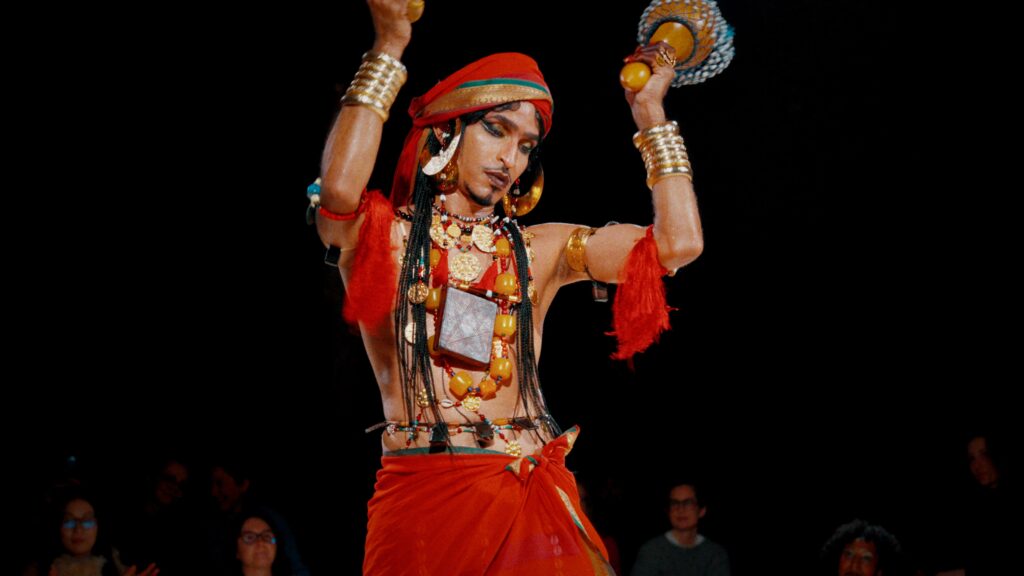
By stepping into the circle of the bridal dance, Ahmed Umar has done more than just create a performance; they have expanded the boundaries of what is considered “traditional.”
Their presence at the 2024 Venice Biennale served as a landmark moment for queer African visibility, and as the 2026 Biennale begins its focus on the “minor keys” of human experience, Umar’s work stands as an essential testament to the power of persistent beauty. Through their grace and technical discipline, they show us that the most ancient rituals can still find a home in the most modern identities, proving that tradition is not a static relic, but a living, breathing dance.